Amy Vo
The Art of Propaganda and Its Masters’ Role
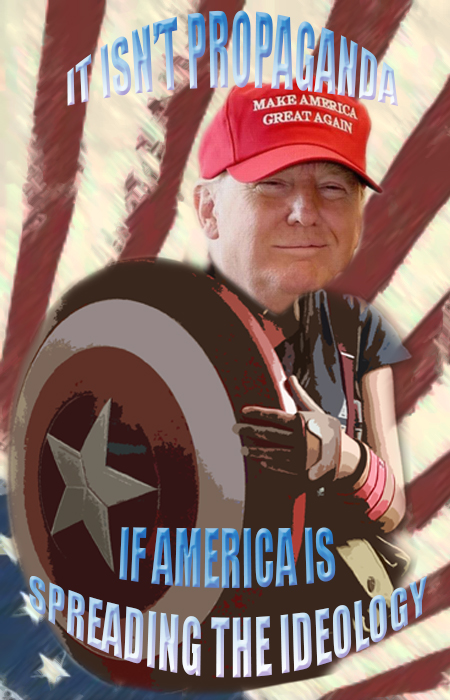
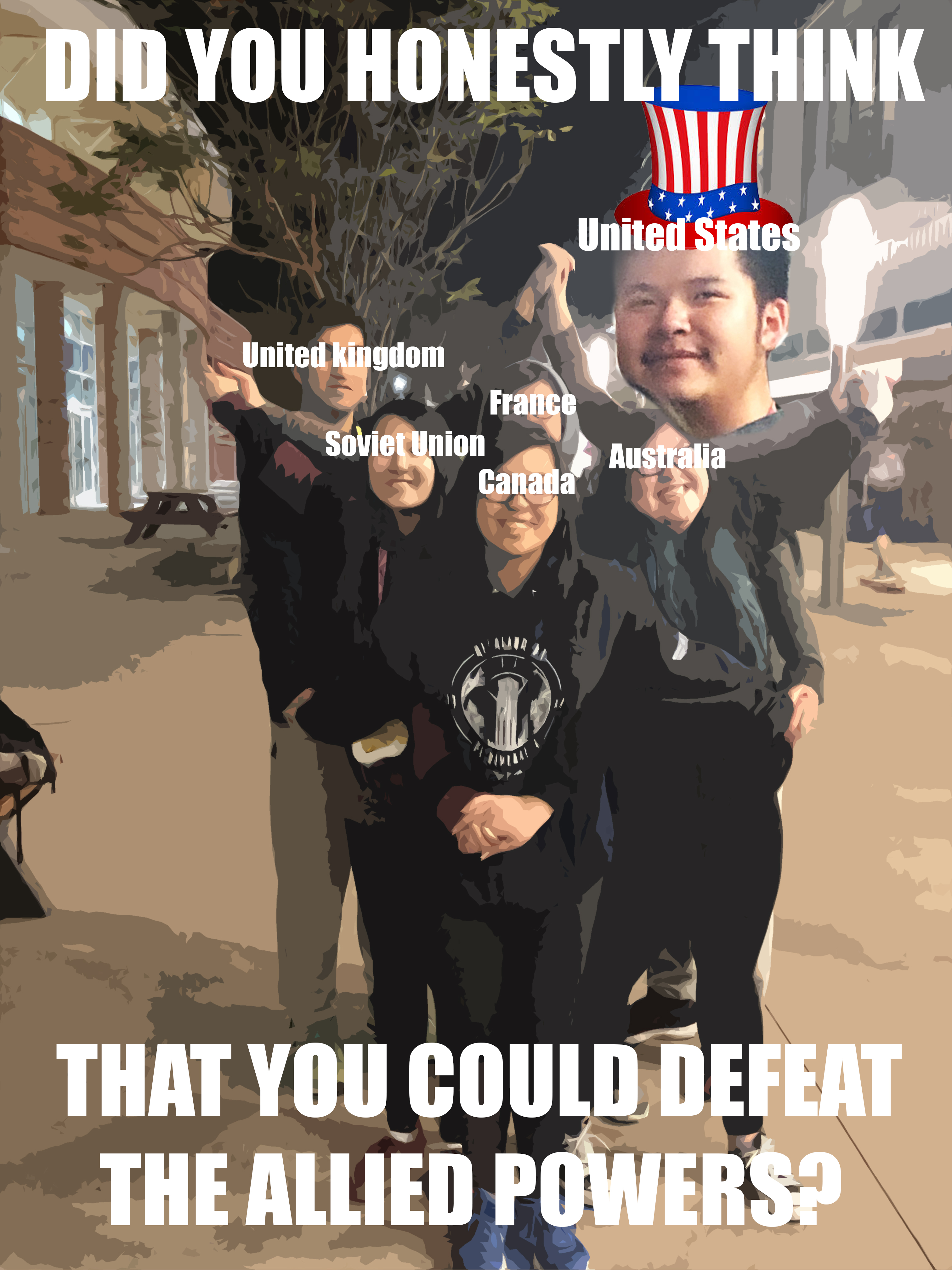
In today’s world, mass media plays an essential role in shaping public opinion. That being the case, the content that the media provides the public with closely ties in with society’s political, social, and economic development. Most media involves some form of propaganda, or misleading information intentionally disseminated to audiences in order to promote a subjective political point of view. In other words, successful propaganda effectively persuades the masses to conform to certain ideologies in order to integrate into society. One groundbreaking book, Manufacturing Consent: the Political Economy of the Mass Media, promotes the paradigm of the Propaganda Model. In this book, Edward Herman and Noam Chomsky introduce their developed Propaganda Model in an attempt to clarify the notion that populations are manipulated and consent is “manufactured” through propaganda in the United States’ mainstream media system (Herman and Chomsky 4). These two social critics also sought to defend the brainwashing agendas of the privileged groups. Because these differences in power dynamics within mass media are so prominent in our society, media representatives should be held accountable for what they present to the public, despite their cries for freedom of speech.
Let us first delve into how propaganda directly impacts society. In the Propaganda Model, Herman and Chomsky outline five filters: ownership and profit, reliance of advertising for revenue, sourcing, flak, and anti-communism (Herman and Chomsky 2). To save time, let us focus on three of the five filters. In the first filter, ownership of media matters because essentially, the media is controlled by the few profit-seeking “dominant elite” who “censor” the news according to their interests (Herman and Chomsky 1). In these corporations who have asserted their role in buttressing their own interests, “stockholders, directors, and bankers” own most of the media shares and stock (Herman and Chomsky 5). According to Chomsky, these privileged groups that dominate society, the state, and the world order do not even have to control the media because they own it (“Noam Chomsky – Manufacturing Consent” 7:26). Because this hierarchy of jobs exist, it encourages, or even force, greater emphasis on profits. According to Herman and Chomsky, seven of the twenty-four corporations’ had a media stock market value that exceeds a billion dollars (Herman and Chomsky 8). The profitability of media goes to show how greedy and selfish owners of the media are in pursuit of greater wealth and power. This is because, owners of media stocks believe that the result of profits is so desirable that even a morally wrong method of communicating media to the masses is okay. Similarly, to quote a commonly said phrase, they believe that the end justifies the means. These morally wrong acts attest to why owners of companies that allow such irresponsible journalism should be condemned for their blatant practice in promoting greed.
Another filter is sourcing. In Chomsky’s words, major media “determine, select, shape, control, restrict in order to serve the interests of dominant, elite groups in society” (“Noam Chomsky – Manufacturing Consent” 3:46-3:55). This means that major media tend to gravitate towards objective news such as facts, statistics, or “national affairs” that have the power to elicit interest from audiences (“Noam Chomsky – Manufacturing Consent” 2:40-2:51). Therefore, news are covered depending on whether they are deemed worthy or unworthy, and ethical issues are rarely focused on. For instance, international news are often completely ignored in favor of superficial news pertaining to the United States. The mass media’s biased propensity towards sensationalism, represents irresponsible and sleazy journalism. This allows individuals, influenced by political and media propaganda, to change their opinion about their neighbors, coworkers, friends and family. This level of power to influence the masses should not be held in the hands of a few wealthy individuals, which goes to show another reason why some journalists and media houses need to be identified in order to be held responsible for their intentional economic lobbies.
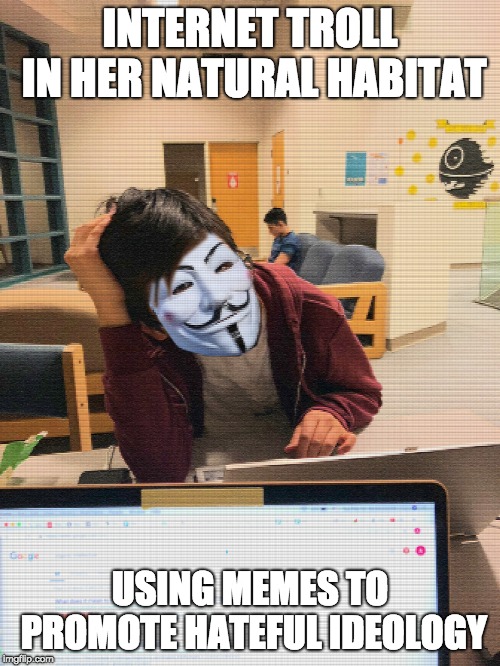
Moreover, in the battle towards representation of ideas, propaganda parallels to the likeness of ideology and freedom of speech. According to Raymond Williams, ideology is defined as “the general process of the production of meanings and ideas” or more broadly considered to be “a system of beliefs characteristic of a particular class or group” (Williams 5). Basically, ideology is ideas pushed forth onto a group of people, consumers in this case, for the purpose of artificially manufacturing a collection of standard beliefs or values. For example, irresponsible coverage of the news in media leads to mass ideologies. In the Propaganda Model, the fifth filter is sowing a common enemy (“Noam Chomsky – The 5 Filters of the Mass Media Machine” 4:03-4:06). This is the notion that if the public has “a boogeyman to fear,” they would mobilize divisiveness towards the enemy (“Noam Chomsky – The 5 Filters of the Mass Media Machine” 4:12-4:16). For example, one common ideology that furthers overall public cynicism is anti-communism, but this can also include anti-terrorism and anti-immigration (“Noam Chomsky – The 5 Filters of the Mass Media Machine” 4:08-4:09). In the battle between rival political groups, the media plays a huge role in deepening democracy in our society. To do this, the notion of anti-communism is pushed forward through hate speech and paranoia displayed in the media, even though, ideally, the media should provide a voice to marginalized groups crippled by poverty, race, gender, sexuality, religious affiliation, and more. By shaping public opinion and deeply ingraining the discrimination of the majority against a minority, the media has become nothing more than a major influencer, or even a guardian, of public interest.
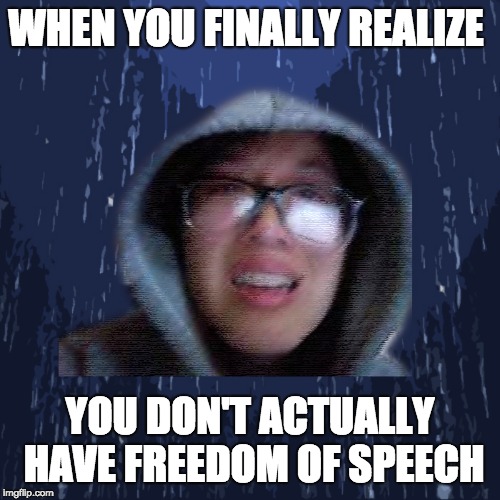
While the media, particularly the internet, has never been a utopia devoid of fake news, terrorist propaganda, and hate speech, the fact that the media has strayed from its original aim of journalism—presenting facts with accuracy—is increasingly turning it into a cesspool of misinformation. Consequently, this fake news epidemic is flooding social media with advertisements trying to sell products, conduct surveys, and present statistics that fit the prejudices and predispositions of companies. Truly, the public’s trust in just about anything—such as ads on television, newspapers, magazines, and social media—is the real sad news, and the minority who challenge these companies’ biased claims are met with dismissive apathy from consumers. To illustrate a comparable scenario, Addison Merryman, a student at Duke University, claims that many people engage in an act called “label flinging,” where they throw around words such as “racist, sexist, homophobe, xenophobe” in order to pressure others to take politically correct stances on controversial topics in fear of backlash (Steinmetz 52). Even though freedom of speech is ideally encouraged to give everyone a voice, it is now also used to silence others. Consumers, under the influence of the media’s propaganda, are now just echoing the ideologies that companies, without accountability in the name of free speech, have meticulously put forth.
Those who contribute to the media but are not influenced by politics, the current economy, or sensational news need not to be afraid. It is time for all the major media influencers, including journalists, news reporters, and media houses restricted by political, social, and economic factors, to be identified and recognized among the public eye. It is time for the media to boost its credibility among the public by training journalists to properly investigate for unbiased news coverages. It is time for news reporters to be armed with research tools that will allow them to discover and develop their own news stories, rather than relying on superficial national news. Thus, propaganda is a form of art, and the masters of propaganda must pay the ultimate price by coming to understand the term: responsibility.
Bibliography
Herman, Edward S., and Noam Chomsky. “A Propaganda Model,” in Manufacturing Consent: The Political Economy of the Mass Media (New York: Pantheon Books, 1988), pp. 1-5.
“Noam Chomsky – Manufacturing Consent.” YouTube. 2:40-7:26. Posted by “Chomsky’s Philosophy.” October 15, 2015. <https://www.youtube.com/watch?v=tTBWfkE7BXU>.
“Noam Chomsky – The 5 Filters of the Mass Media Machine.” YouTube. 4:03-4:16. Posted by “Al Jazeera English.” March 2, 2017. <https://www.youtube.com/watch?v=34LGPIXvU5M>.
Steinmetz, Katy. “The Campus Culture Wars,” Time (October 23, 2017), pp. 52.
Williams, Raymond. “Ideology,” in Marxism and Literature, pp. 5. New York: Oxford University Press, 1977.
 The Art of Propaganda